Your home should be a comfortable place where you and your family can feel safe. However, some potential indoor environmental concerns are difficult to recognize without proper testing. Radon is one example. This naturally occurring radioactive gas can enter buildings through the ground and accumulate indoors without producing any noticeable smell, color, or taste.
For homeowners in Rochester, NY, understanding when to arrange radon testing in Rochester NY is an important part of maintaining a healthy indoor environment. Testing becomes particularly relevant when purchasing a property, finishing a basement, making major renovations, or checking an existing home’s indoor conditions.
Here are several situations when homeowners should consider scheduling a radon test.
When Purchasing an Existing Home
Buying a property involves evaluating more than its appearance and structural condition. Buyers should also consider potential environmental concerns that may affect the indoor environment.
Radon can enter properties through foundation cracks, openings around pipes, construction joints, and other gaps between the building and surrounding soil. Because the gas cannot be detected through normal senses, a home may have elevated radon levels even when everything looks perfectly normal.
Before completing a property purchase, consider including radon testing in your home evaluation process.
This provides property-specific information that can help you understand the indoor radon conditions before making a final decision.
Buyers should also review available previous test results and ask whether any radon reduction work has been completed.
Before Converting Your Basement Into Living Space
A basement renovation can create valuable additional living space. Many Rochester homeowners consider converting unfinished basements into bedrooms, home offices, entertainment rooms, or recreational areas.
However, changing how you use a lower level can also change your potential exposure to indoor radon.
If your basement was previously used only for storage, you may not have spent much time there. After renovation, you or your family might occupy that space for several hours every day.
Testing before beginning the renovation can provide useful information about existing conditions. It is also important to arrange another test after major renovation work because construction changes can affect radon entry and indoor levels.
The CDC recommends radon testing before and after renovations, particularly when a lower-level area is being converted into living space.
When Your Property Has Never Been Tested
Many homeowners assume that if their property has never experienced noticeable problems, there is no reason to arrange additional environmental testing.
However, radon does not create obvious warning signs. A property can have elevated indoor concentrations without visible damage, unusual odors, or other easily recognizable symptoms.
The only practical way to determine the amount of radon inside a home is through appropriate testing.
According to the New York State Department of Health, homeowners should test their properties every five years, or every two years when a radon mitigation system is installed.
If you recently purchased a home and cannot find reliable previous radon results, arranging a new test is a sensible step.
During the Colder Months in Rochester
Winter is a useful time to consider radon testing in Rochester because homes are generally kept closed to retain indoor heat.
The New York State Department of Health recommends testing during winter when windows and doors can remain closed under the required testing conditions.
For accurate results, follow the testing instructions carefully. New York State guidance recommends keeping exterior doors and windows closed for 24 hours before testing begins and throughout the testing period.
Proper test placement and building conditions also matter. The device should remain undisturbed in the appropriate testing location.
A professional testing service can help homeowners understand the process and arrange testing according to the applicable procedures.
After Installing a Radon Reduction System
If your property previously had elevated radon levels and a mitigation system was installed, testing should not end after the equipment begins operating.
A follow-up test helps determine whether the system is effectively reducing indoor radon concentrations.
New York State recommends testing within 30 days after installing a radon mitigation system. Regular retesting is also important to monitor performance over time.
Homeowners should pay attention to any maintenance instructions associated with the installed equipment. If a system stops operating correctly, radon levels may increase again.
Keeping previous reports and follow-up results together can make it easier to monitor changes in your property’s indoor conditions.
How to Understand Your Radon Test Results
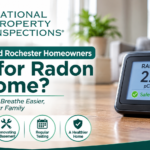
Radon concentrations are commonly measured in picocuries per liter of air, written as pCi/L.
Understanding the result is important because it helps homeowners determine whether further action should be considered.
The U.S. Environmental Protection Agency recommends taking corrective action when radon levels reach or exceed 4 pCi/L. New York State also recommends fixing homes at this level and suggests considering corrective measures when results fall between 2 and 4 pCi/L.
A higher reading does not mean you should panic. It means the property needs appropriate attention and further steps should be discussed with a qualified radon mitigation professional.
Depending on the circumstances, additional testing may also be recommended.
Why Professional Radon Testing Matters
Accurate testing depends on using suitable equipment, choosing an appropriate location, and following the required testing conditions.
Improper placement, disturbed equipment, or incorrect testing conditions can affect the reliability of results.
National Property Inspections provides professional radon testing for homeowners, buyers, sellers, and property owners in Rochester, NY.
The process includes understanding the property’s needs, reviewing suitable testing locations, placing the equipment according to the applicable procedure, and communicating the results clearly.
You can learn more about professional radon testing in Rochester NY and understand how the service can help you obtain property-specific information.
Final Thoughts
Radon testing is an important consideration for homeowners who want a better understanding of their property’s indoor environment. Whether you are purchasing a home, renovating a basement, checking an older property, or monitoring an existing mitigation system, timely testing can provide valuable information.
Because radon cannot be identified through sight or smell, waiting for visible warning signs is not a reliable approach. Testing is the practical way to determine indoor radon levels and decide whether further action is necessary.
If you want to understand the radon conditions inside your property, visit National Property Inspections in Rochester NY to explore available inspection services.
You can also schedule professional radon testing in Rochester NY to discuss your property and arrange a convenient appointment.